




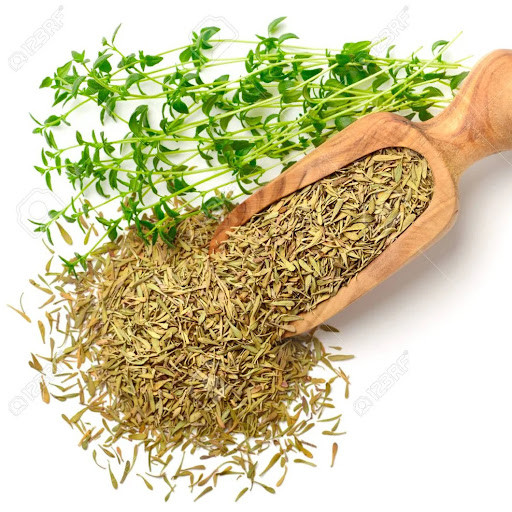
1kg of dried thyme
Inhouse product
-
 ₦46,500.00
₦47,500.00 -
₦20,000.00
₦22,000.00 -
₦16,500.00
₦17,000.00 -
₦19,000.00
₦20,000.00 -
₦7,500.00
₦8,000.00 -
₦38,500.00
₦40,000.00




Reviews & Ratings
Thyme has several health uses, including its ability to act as an expectorant to help with coughs and respiratory congestion, and its antibacterial, antifungal, and antioxidant properties. It may also help regulate blood pressure and improve circulation, and its extract is used in some skin and hair products to address issues like acne and hair loss.
Respiratory health
Acts as a natural expectorant to help clear mucus and phlegm from the respiratory tract.
Can soothe sore throats and reduce coughing.
Its anti-inflammatory properties can help reduce congestion and make breathing easier.
Often brewed into a tea to help relieve symptoms of colds, flu, and bronchitis.
Skin and hair
Skin: Contains antibacterial and antimicrobial properties that can help fight acne-causing bacteria and other skin infections. Thyme extract is used in some skincare products.
Hair: May help with dandruff due to its antibacterial properties. Thyme oil is also used in hair masks to support hair growth.
Heart health
Rich in potassium, a mineral that helps regulate blood pressure.
Some studies suggest that thyme may lower blood pressure and cholesterol levels.
Its high iron content supports the production of red blood cells, which helps improve circulation.
Other uses
Antioxidant properties: Thyme is rich in antioxidants that help prevent cell damage.
Immune support: Its nutritional content, including vitamins A and C, iron, and copper, helps boost the immune system.
Oral health: Certain compounds in thyme have been shown to have antibacterial effects, and it is used in some oral hygiene products.
Frequently Bought Products
-
₦46,500.00
₦47,500.00 -
₦20,000.00
₦22,000.00 -
₦16,500.00
₦17,000.00 -
₦19,000.00
₦20,000.00 -
₦7,500.00
₦8,000.00 -
₦38,500.00
₦40,000.00
Foodlistin.com